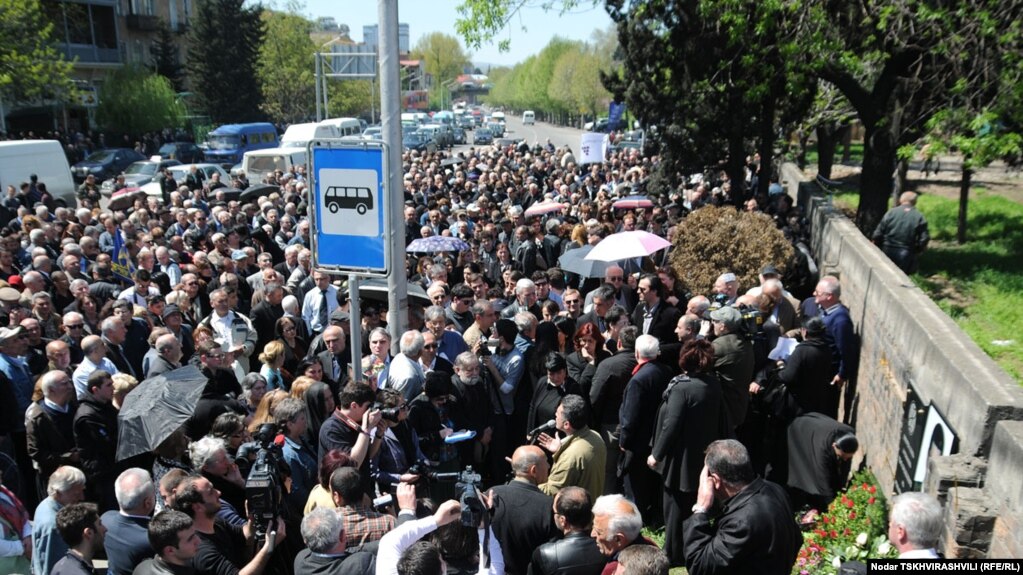
Protest demanding an investigation into the tennis courts operation

2011

This AI-generated translation may not be completely accurate.
Protest demanding an investigation into the tennis courts operation
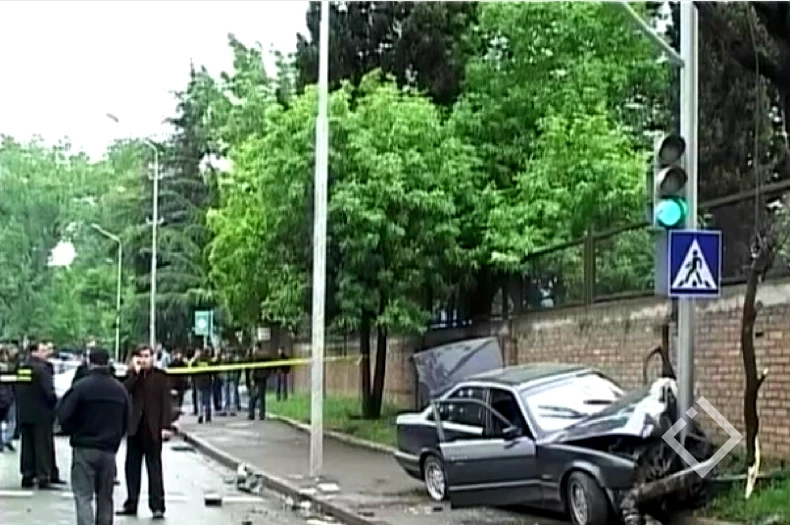
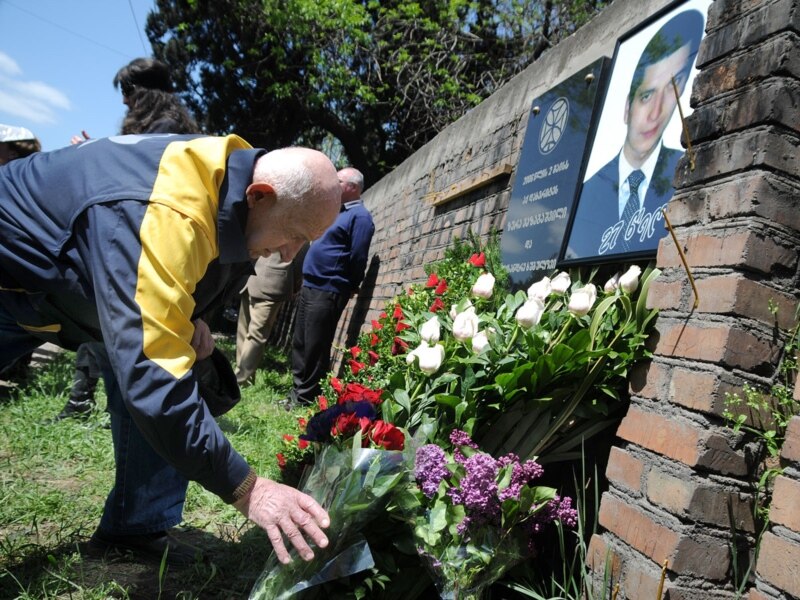
On May 2, 2006, during a special police operation on the territory of the former “Dinamo” tennis courts in Tbilisi, law enforcement officers shot and killed 22-year-old Zurab Vazagashvili and Aleksandre (Sasha) Khubulov. The media later referred to this incident as the Tennis Courts Special Operation.
According to the Ministry of Internal Affairs, Vazagashvili was a member of an armed robbery group planning an attack in central Tbilisi, which police claimed to have prevented. However, the victims’ families rejected this explanation, arguing that the police acted on mere “operative information,” not on evidence of a crime in progress. The police opened fire at the suspects’ car on a crowded street, without justification. According to the official account, officers first shot out the car’s tires, after which it crashed into a traffic light pole. Police then claimed that the suspects opened fire from inside the vehicle, forcing officers to return fire. One police officer was lightly injured. The investigation was closed in 2007 without any convictions.
The fight for justice
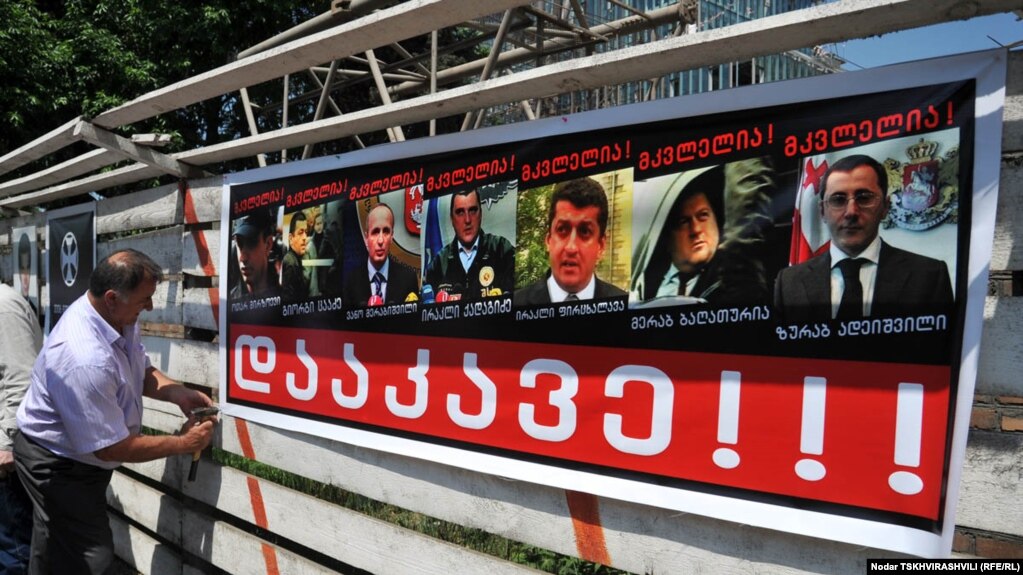
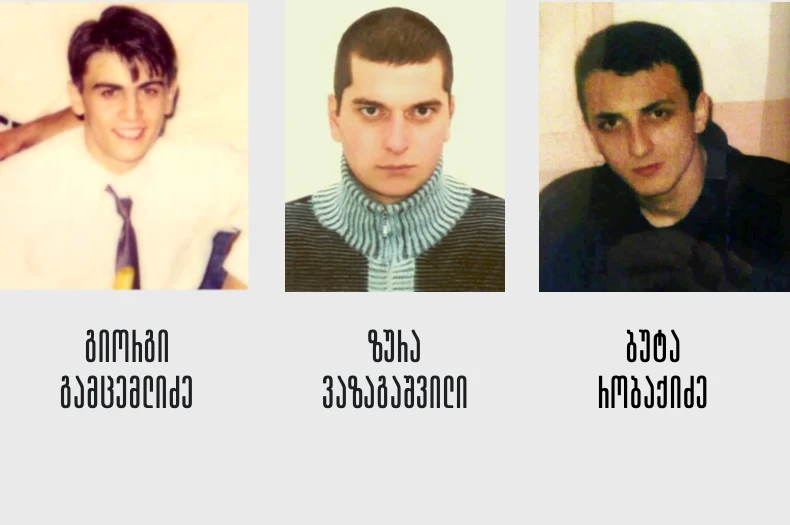
Human rights defenders and NGOs immediately condemned the operation as a criminal act by the authorities. Along with the 2004 killing of Buta Robakidze and the 2006 Sandro Girgvliani case, the Tennis Courts Operation became one of the key examples of police violence under the United National Movement government. The Public Defender concluded that the case was an ambush-style premeditated murder, yet no one was punished, and the victim’s family was stripped of their “victim” status. The Vazagashvili family took the case to the European Court of Human Rights (ECHR).
Five years after the shooting, on May 2, 2011, a large protest took place near the former tennis courts, demanding a fair investigation and punishment of those responsible. In 2009, the families of victims of police violence founded the civic movement Save a Life — its founders included Yuri Vazagashvili (father of Zurab Vazagashvili), Soso Robakidze (father of Buta Robakidze), and Jambul Gamcemlidze (father of Giorgi Gamcemlidze, killed in 2008).
Other related cases
The Buta Robakidze case (2004):
Nineteen-year-old Buta Robakidze was shot dead by police near the Didube Church on November 23, 2004. Police claimed the shooting occurred during the arrest of an “armed gang.” Later, footage released by the Ministry of Internal Affairs’ TV program Patrol showed police staging the scene, placing a Kalashnikov rifle near the victim’s body. Officer Grigol Bashaleishvili was sentenced to four years in prison for negligent homicide, but Robakidze’s family insisted that higher-ranking officials were being protected.
The Giorgi Gamcemlidze case (2008):
On May 8, 2008, 31-year-old Giorgi Gamcemlidze was shot dead by a police officer after a car chase in Tbilisi. The officer was convicted of negligent homicide and sentenced to two years in prison with a two-year probation period. The Georgian Young Lawyers’ Association (GYLA) later filed a complaint to the ECHR, arguing that the punishment was disproportionately lenient.
According to a 2009 Human Rights Center report, 54 people were killed by police gunfire between 2004 and 2008.
Renewed investigation under the Georgian Dream government
After the change of power in 2012, all three cases were reopened.
Zurab Vazagashvili case:
In February 2015, the Prosecutor’s Office declared the case solved. It found that Vazagashvili and Khubulov were killed on the orders of high-ranking police official Irakli Pirtskhalava, who sought revenge because Khubulov had earlier informed police about the drug-related arrest of Pirtskhalava’s brother. Police fired 97 bullets at the suspects’ car while it was stopped at a red light. Eleven officers were charged; five were convicted, including Pirtskhalava.
In 2019, the ECHR ruled in favor of the Vazagashvili family, finding Georgia responsible for violating Article 2 (right to life) and ordering the state to pay €50,000 in damages.
Buta Robakidze case:
Following a five-year trial, in 2018, five former senior officials of the Ministry of Internal Affairs — Guram Donadze, Zura Mikadze, Davit Iashvili, Zaza Bakradze, and Irakli Pirtskhalava — were found guilty of falsifying evidence and covering up the murder. Four received prison sentences, while Bakradze received a suspended sentence after a plea deal. In 2019, former Interior Minister Irakli Okruashvili and ex-Prosecutor General Zurab Adeishvili were also charged with abuse of power in connection with the case.
Giorgi Gamcemlidze case:
In 2014, the Georgian government admitted before the ECHR that Gamcemlidze’s right to life had been violated and offered a €20,000 settlement, along with a promise to reopen the investigation. However, as of 2018, the case remained unresolved.
Legacy
The Tennis Courts Operation remains one of the most emblematic cases of state violence and impunity in post-Rose Revolution Georgia — a symbol of the long struggle for justice by victims’ families. In 2015, Zurab’s father, Yuri Vazagashvili, was killed by an explosion on his son’s grave, a murder later linked to an active police officer who was sentenced to 20 years in prison.