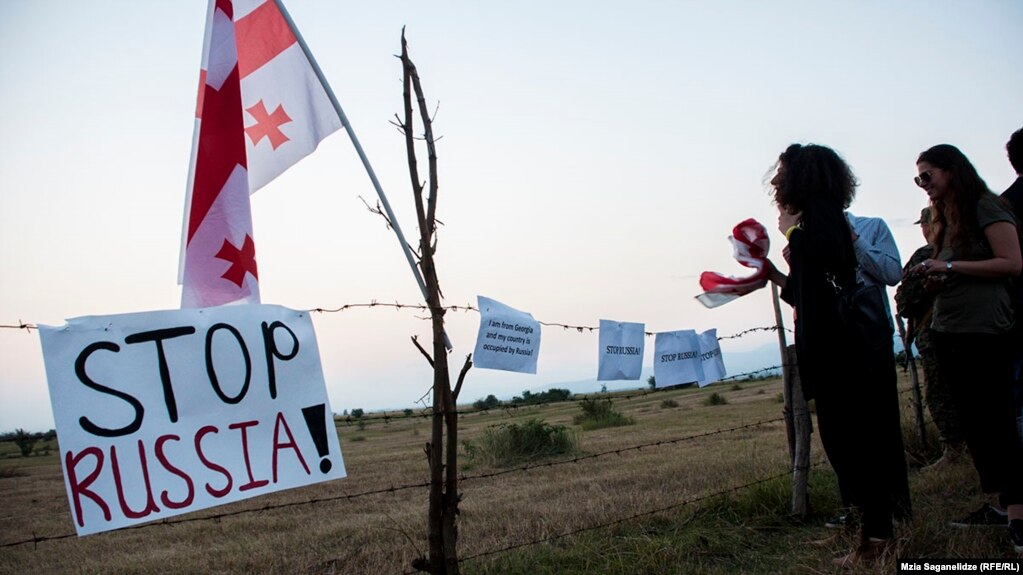
Protest against the “creeping occupation”

2015

This AI-generated translation may not be completely accurate.
Protest against the “creeping occupation”
On July 14, 2015, a protest was held in the village of Khurvaleti, Gori municipality, against Russia’s so-called “creeping occupation.” The term referred to the periodic advance of the occupation line by Russian forces in the region of Kvemo Kartli, after which Georgian citizens were prohibited from entering the affected lands. The latest such incident occurred on July 10, 2015, when, according to the Ministry of Internal Affairs, occupation forces erected “border” signs near the villages of Khurvaleti and Tsitelubani in the Gori district, as well as near the village of Orchosani in the occupied Akhalgori district, close to the Tbilisi–Gori highway. More than ten hectares of land, including a section of the Baku–Supsa oil pipeline, fell under occupied territory.
Protesters called on the government to take effective measures to stop Moscow’s aggression and urged the international community to pay closer attention to the ongoing developments in Georgia’s occupied territories.
The installation of occupation banners was condemned by both civil society and political party representatives. On July 14, journalists also visited Khurvaleti, where they joined in the protest against Russia’s “creeping occupation,” holding placards and banners reading “No to Occupation” and “Stop Russia!”
Local residents appealed to the government for help, uncertain whether Russian border guards would allow them to harvest crops or access the plots that had ended up beyond the new occupation line. Villagers said that since the August 2008 war, Khurvaleti had already lost about 70 percent of its farmland, its cemetery, and all its pastures, putting the village at risk of depopulation.
The head of the Gori municipality, Davit Oniashvili, visited Khurvaleti and promised locals that they would not face problems during the harvest. He added that the central government was actively working to resolve issues caused by the shift of the occupation line.
Protests against the “creeping occupation” continued the following day near the village of Orchosani, where members of the organization “Free Zone” gathered. They were confronted by some local residents, who argued that such demonstrations in the conflict zone could provoke tension. According to the Ministry of Internal Affairs, five participants of the protest were detained under Article 173 of the Administrative Offenses Code, which concerns resistance to police officers.