Protest demanding the restoration of the Agricultural University’s authorization

2013

This AI-generated translation may not be completely accurate.
Protest demanding the restoration of the Agricultural University’s authorization
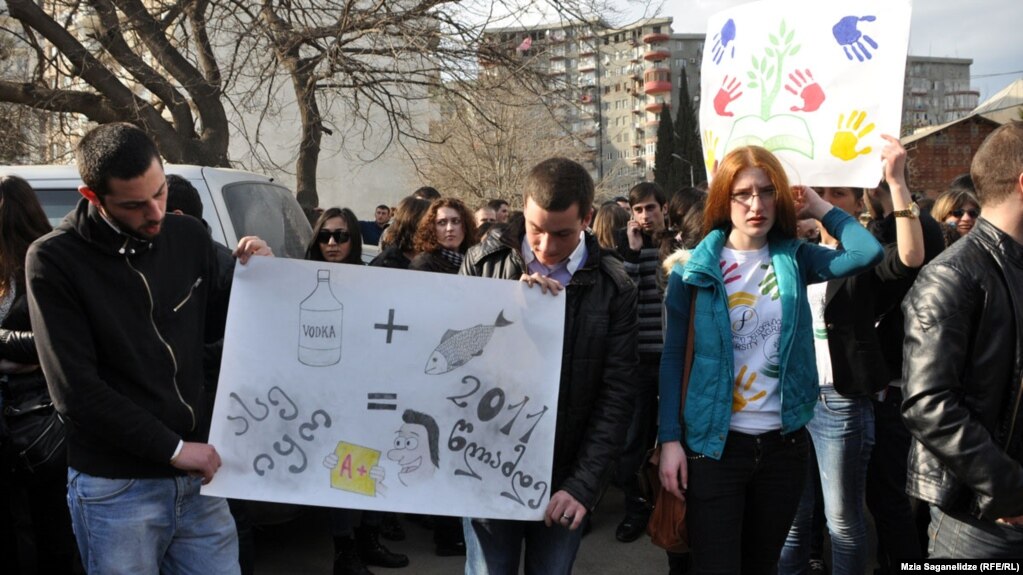
The Agricultural University’s authorization was revoked by the National Center for Educational Quality Enhancement on March 12, 2013. According to the Center, the inspection of the Agricultural University began on January 3, 2013, following a complaint filed several weeks earlier regarding violations of authorization standards. The revocation of the Agricultural University’s authorization sparked protest rallies among students from various universities.
The Agricultural University was owned by a non-entrepreneurial (non-commercial) legal entity called the Knowledge Fund, founded in 2007 by Kakha Bendukidze, head of the Free University. Bendukidze regarded the inspection as a political decision.
“The politicization of the issue harms the education system,” said Giorgi Margvelashvili, Georgia’s Minister of Education and Science, in response to the statement made by the rector of the Agricultural University. According to him, the National Center for Educational Quality Enhancement was simply performing its duties.
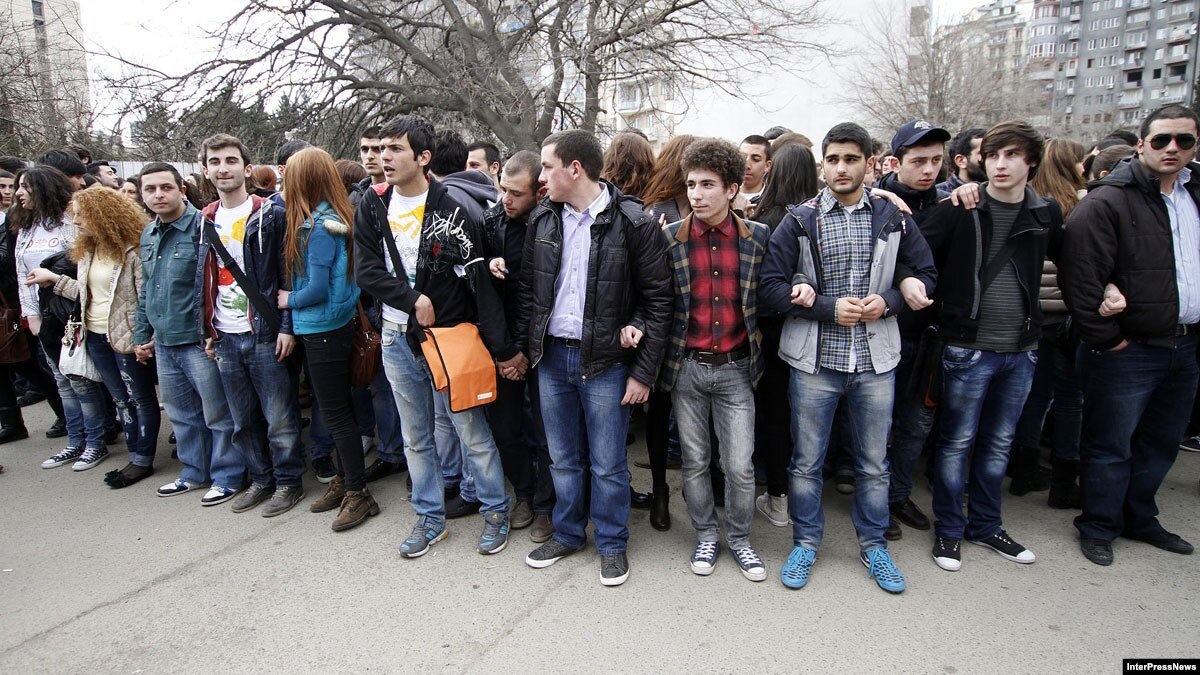
The protest demanding the restoration of the Agricultural University’s authorization began on March 11, immediately after students learned that the university’s authorization was under threat. On March 13, students from the Free University, Georgian Technical University, Ilia State University, Tbilisi State University, the Academy of Arts, and other higher education institutions expressed solidarity with the Agricultural University and protested the suspension of its authorization. Students first held demonstrations at their own universities and later gathered in front of the Ministry of Education and Science. Several students participating in the protest met with Education Minister Giorgi Margvelashvili. At a briefing held after the meeting, he stated that no one had closed the Agricultural University. Margvelashvili promised the students that the issue would be resolved as quickly as possible and that the problem concerning the university’s authorization would soon be settled.
In the following days, protests by the Agricultural University’s students continued. Their demand remained unchanged — to annul the March 12 decision of the National Center for Educational Quality Enhancement regarding the university’s authorization revocation.
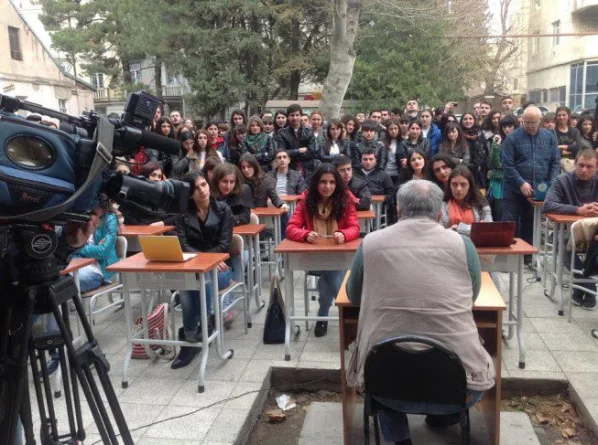
On March 20, students gathered again in front of the Ministry of Education building and expressed their protest symbolically. They brought desks, a blackboard, and chairs, and held an open-air lecture led by university lecturer Levan Tatishvili, dedicated to the topic of memory.
On March 26, the Agricultural University’s authorization was restored. According to the Authorization Council’s assessment, the majority of the deficiencies that had led to the suspension of the university’s authorization had already been corrected.
This event surrounding the Agricultural University of Georgia’s authorization revocation and subsequent student protests in 2013 became a key moment in the country’s higher education reform and sparked public debate about political influence, academic independence, and the role of the National Center for Educational Quality Enhancement.