“City of Cells” – Opposition protest

2009

This AI-generated translation may not be completely accurate.
“City of Cells” – Opposition protest
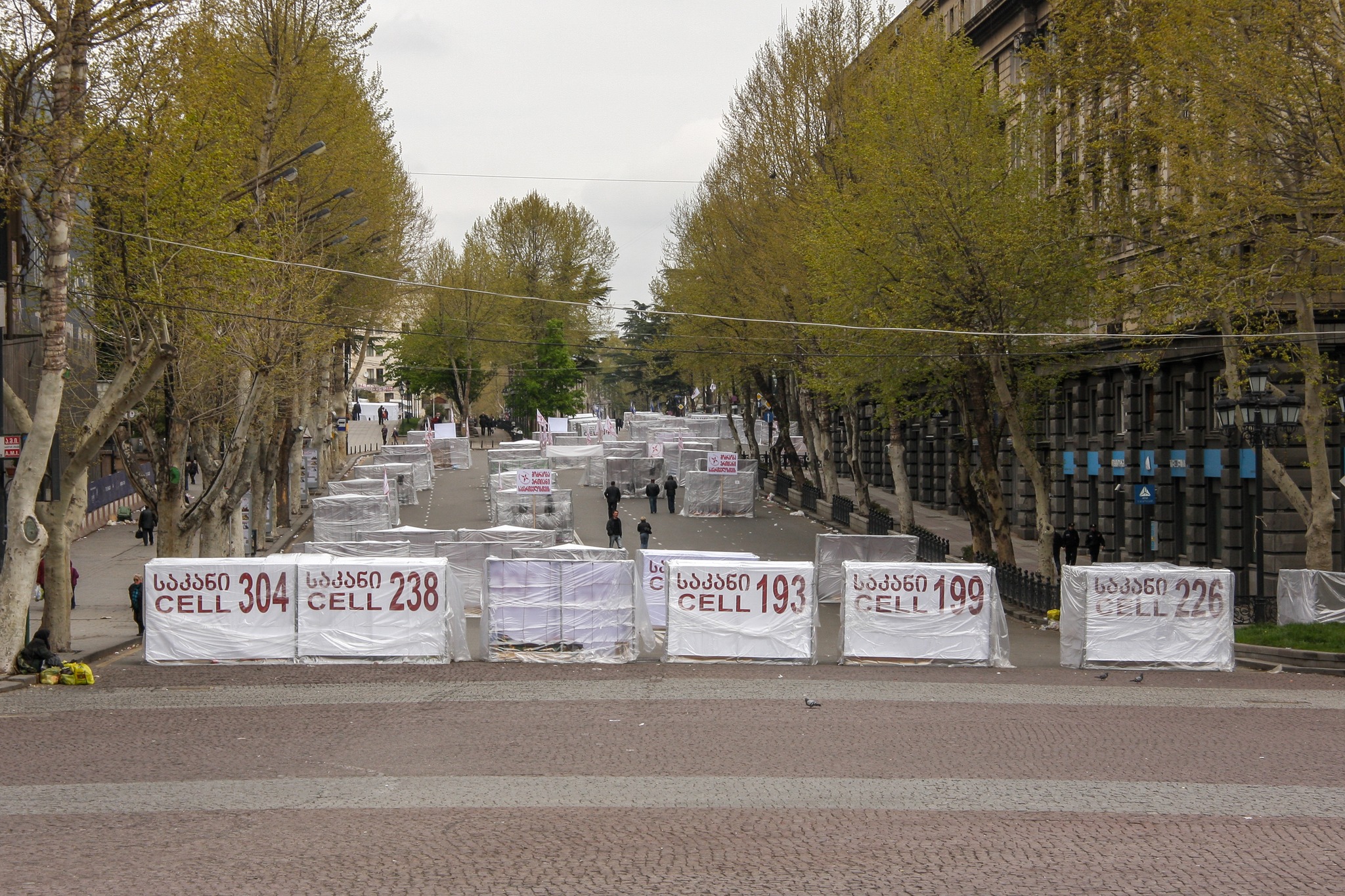
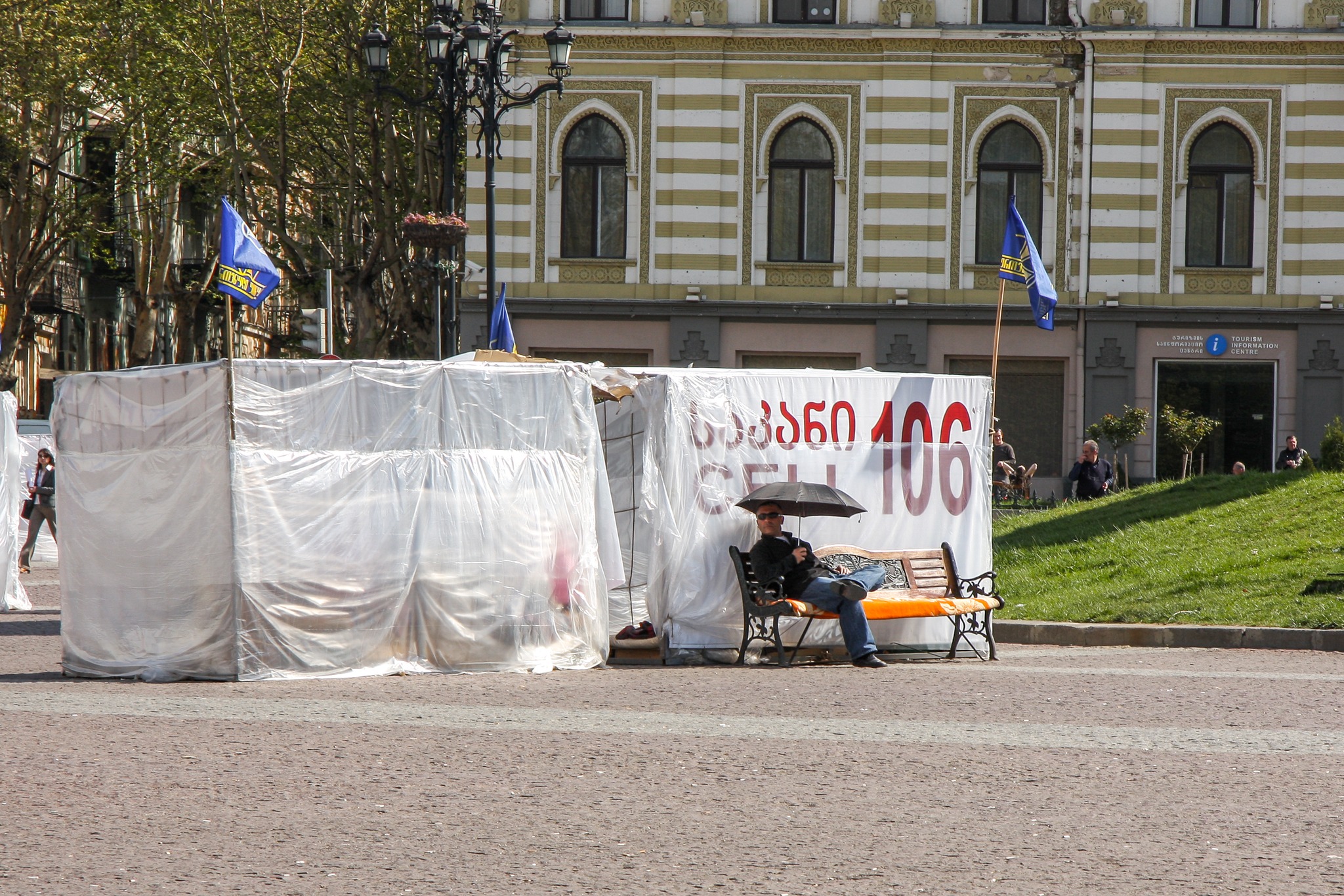
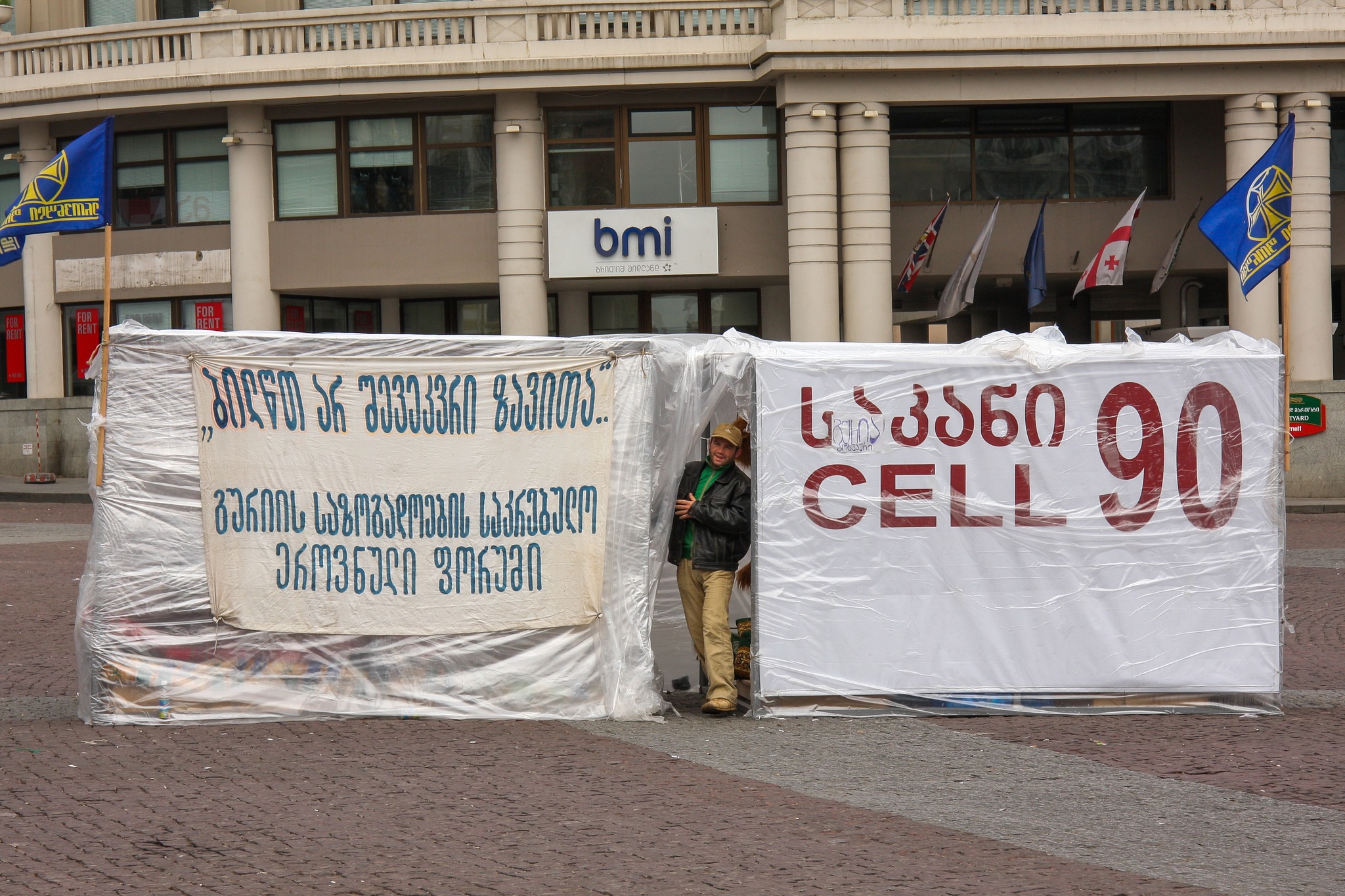
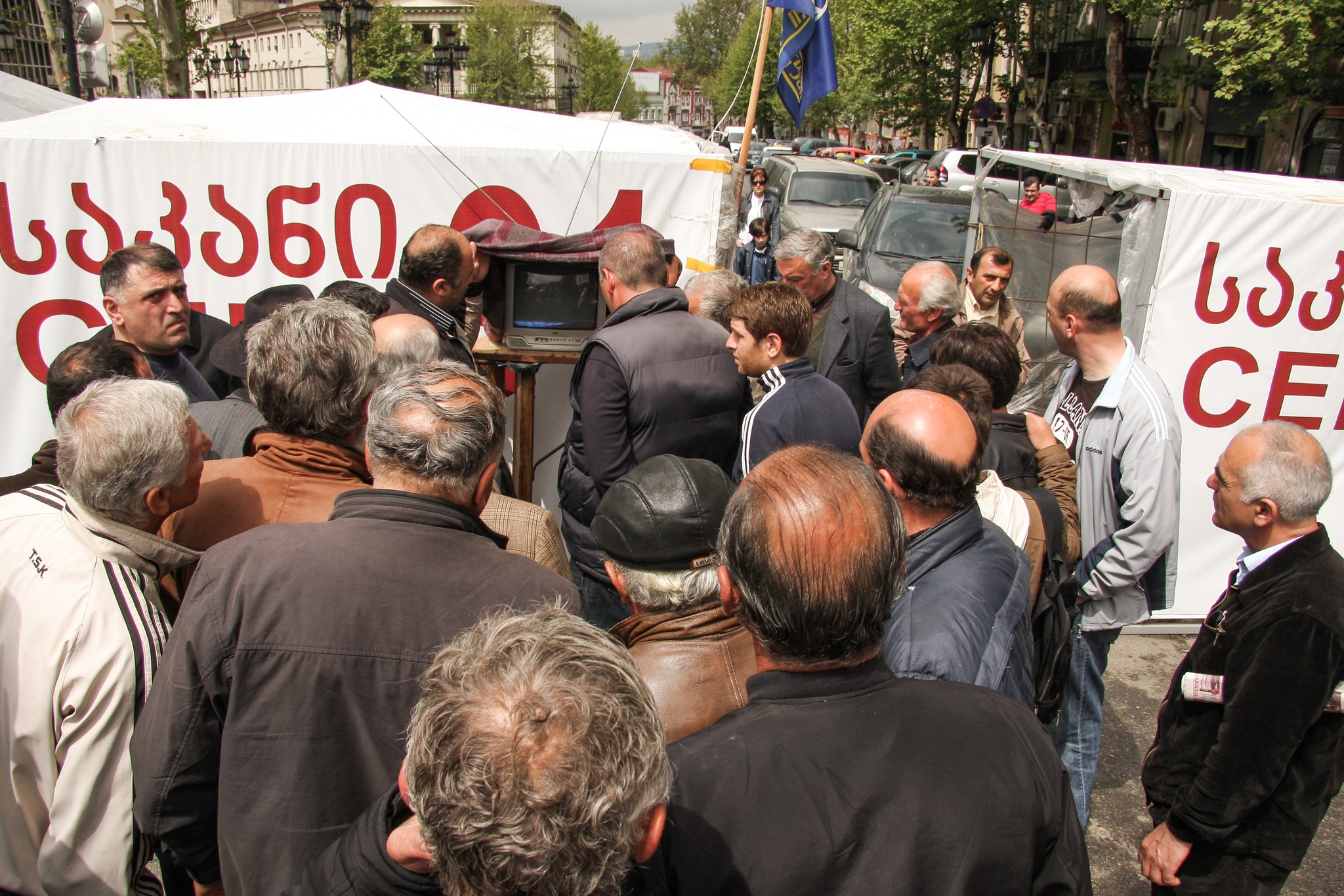
2009 was a year of large-scale protests. In the spring of that year, protesters erected cell-like structures in the streets of the city, which the media dubbed the “City of Cells.”
The protest began on April 9, 2009, when opposition parties organized a large rally demanding the resignation of President Mikheil Saakashvili and the scheduling of early presidential elections. Preparation for the rally began on March 27 by thirteen opposition parties, and they drafted a “Unity Manifesto,” believing that the government had led the state into a dead end: political, economic, and social crises had intensified, private property was being violated, the judiciary was degraded, and “finally, the country’s involvement in the military provocation planned and initiated by Russia in August 2008 stirred distrust toward the government in the majority of the population, as well as hopelessness and nihilism.”
The parties that joined the manifesto included: “Alliance for Georgia” (Irakli Alasania); “Republicans”; “New Right”; “Democratic Movement – United Georgia” (Nino Burjanadze); “Georgia’s Way”; “Conservative Party”; “People’s Party”; “Union of Traditionalists”; “Future Party”; “Women’s Party”; “Party of Industrialists”; “Christian-Democratic Alliance.” Also on board was Levan Gachechiladze, who had been a presidential candidate in 2008. By signing, they committed to hold a peaceful rally and act in coordination. The leaders held meetings in Telavi, Kutaisi, Batumi, and Zugdidi in preparation for the rally.
A few days before the start of demonstrations, on March 31, the ruling party, the “National Movement,” offered a dialogue to the “radical opposition”: promises included job creation, national security, safeguarding national interests, and political reform. On April 1, the opposition called the offer “inadequate” and considered it an attempt to shift attention away from the real problems. The government proceeded with the dialogue nonetheless, but not with the parties participating in the protest.
On April 9, thousands gathered in front of Parliament on Rustaveli Avenue. The rally organizers called for the president’s resignation and gave him 24 hours to comply. Protesters spent the night in front of Parliament. According to the Public Defender, that night two incidents occurred: members of the “Why?” movement, returning home from the protest late in the evening, were blocked by three jeep-type vehicles; masked persons got out of those vehicles, physically assaulted them, and threatened, “Don’t come to the rally anymore or you will be punished physically.”
On the second day of the protest, as the opposition prepared to announce an action plan, President Saakashvili proposed the direct election of the mayor of Tbilisi.
The opposition’s demands were not met. Beginning on April 14, iron “cells” and tents were erected in several locations in Tbilisi as a form of protest: in front of Parliament, in Avlabari near the President’s residence, in front of the public broadcaster’s building, on Kostava Street. Within a few days, cells were also placed outside Tbilisi City Hall and the Government Administration, and later in Zugdidi. In total, dozens of cell-structures were erected.
The idea to erect the “cells” came from Gia Gachechiladze (“Unknown”), the brother of opposition candidate Levan Gachechiladze. After the 2008 presidential election, he started a show called “Cell #5” on the television station Maestro (5 was the electoral number of the ruling “National Movement”). The show significantly increased the protest momentum.
The opposition was dissatisfied with how the public broadcaster covered the protests, and they added to their demands the resignation of the station’s director, Levan Qubaneishvili. That dissatisfaction was shared by some members of the broadcaster’s supervisory board. On April 23, three of the nine board supervisors — Irma Sokhadze, Marina Vequm, and Giorgi Anchabadze — resigned their positions in protest; the next day a fourth supervisor, Mikheil Chiurieli, joined them. Protesters subjected television staff to a “corridor of shame.” On April 30, the Tbilisi City Court sentenced a man to six months imprisonment for sending a threatening letter to the director of the public broadcaster; he was later released through a plea agreement.
On April 28, Levan Gachechiladze addressed the protesters, calling on them to carry the accumulated trash on Rustaveli Avenue to the front of City Hall the next day to block the road and refuse to pay cleanup fees.
As part of the protest, participants at various times blocked the Kakheti highway in front of the Ministry of Internal Affairs, both banks of the Mtkvari River, and railway lines for short periods.
On May 6, responding to a call by Gia Gachechiladze (“Unknown”), a march was held from Rustaveli Avenue to the Tbilisi Police Main Division, where an incident occurred. Protesters demanded the release of three citizens whom police had arrested on charges of “hooliganism” allegedly involving violence against a journalist from the public broadcaster.
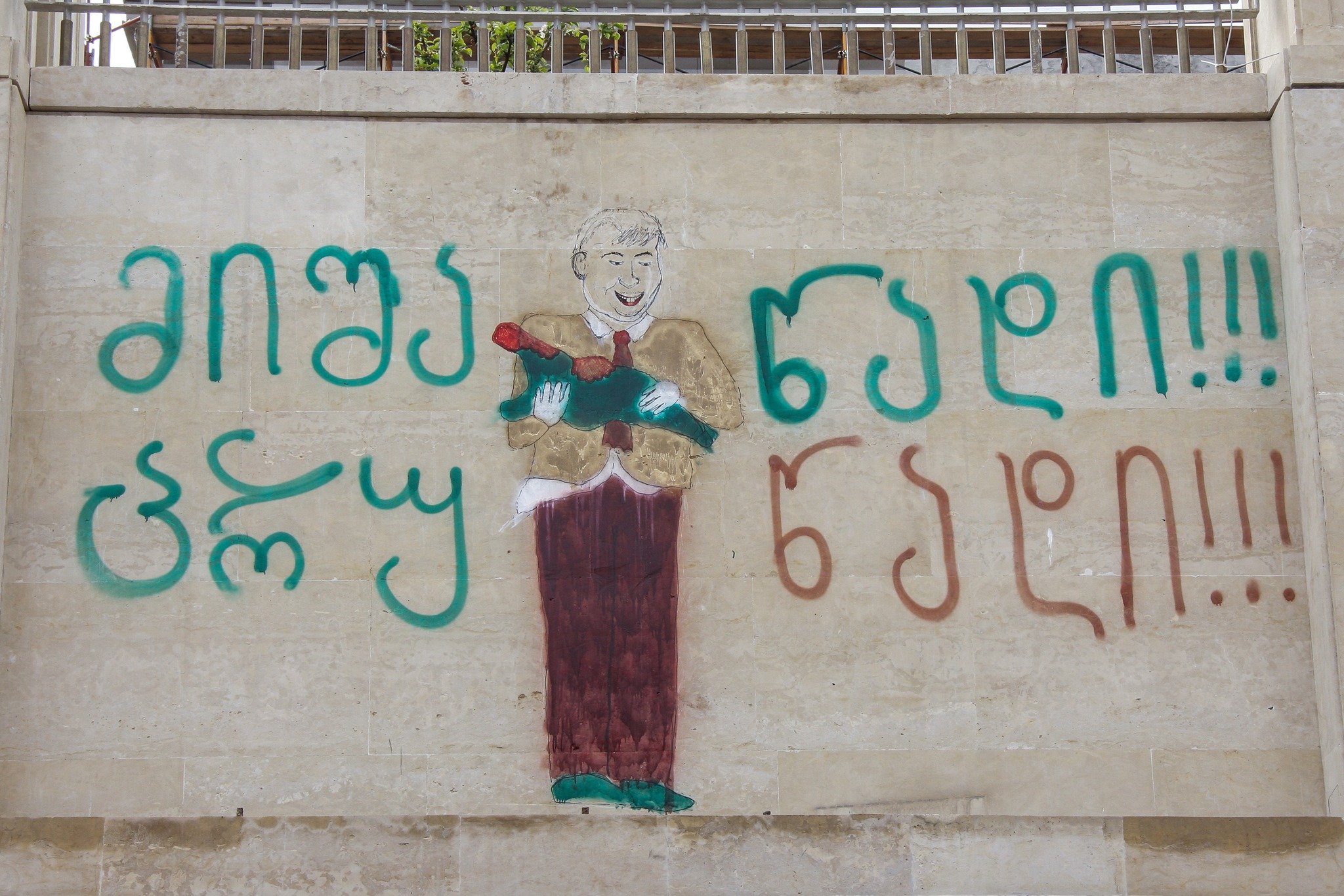
Gia Gachechiladze climbed onto an iron barricade and jumped into a courtyard unexpectedly. He claimed police beat him, including with batons. When “Unknown” was no longer visible among the officers, protesters began shaking metal barriers and insulting the police. At that moment, a special forces unit appeared, equipped with shields and batons, and occupied a space along the fence. Protesters chanted the president’s name: “Misha, Misha’s.”
Several citizens were injured in the confrontation, including protest leaders and journalists. Later it was revealed that two protesters had been shot in the eye and lost vision. The Public Defender, Sozar Subari, stated that police also threw stones. No one was arrested at the protest. Late at night, a few dozen people returned from the main police headquarters to Rustaveli Avenue.
Protests also took place in the regions. On May 21, both banks of Tbilisi’s river were blocked and traffic was paralyzed for an hour on the central artery.
The protest energy was intensified by the fact that one day before a mass action planned for May 26, an explosion occurred near the entrance to the Maestro television building. At the time, Gia Gachechiladze’s show “Cell #5” was on the air. The blast was powerful enough to break windows and damage the iron door of the building.
The mobilization campaign by opposition groups in the regions gathered tens of thousands of people on May 26 at the Boris Paichadze National Stadium. One of the opposition leaders, Levan Gachechiladze, said the crowd no longer fit in the stadium.
At 14:00, “Unknown” arrived and was greeted with thunderous ovation, carried around by attendees around the stadium. At Gachechiladze’s request, demonstrators moved to the courtyard of the Holy Trinity Cathedral (Sameba), waiting for the Patriarch to address them. The Mayor of Tbilisi, Gigi Ugulava, and government representatives also went to Sameba Cathedral, where they held a short meeting with Giorgi Gachechiladze. These events coincided with a statement from the Patriarch, who hinted that the opposition should drop its demand for the president’s resignation. After that statement, some opposition leaders and Giorgi Gachechiladze claimed the Patriarch had been pressured into making the statement.
From Sameba, protesters marched to Parliament. Later during the day, participants blocked all railway tracks near Tbilisi Central Station. Late that night, protesters were asked by David Gamkrelidze, leader of “New Right,” to return to Parliament.
The following day, the Gachechiladze brothers and Nino Burjanadze visited the Patriarch again, though they made no public comment afterward. That same day it emerged that the opposition parties organizing the protests had failed to agree on a joint action plan. Thereafter, the National Forum, whose representatives mostly occupied the cells, decided to withdraw activists from the cells and continue the campaign regionally with individual action plans.
After more than 50 days since the start of the protest, on June 1, 2009, the opposition took down the cells in front of Tbilisi City Hall, and vehicular traffic resumed. However, the cells remained on Rustaveli Avenue and in front of the Presidential Administration.
On June 9, one of the protest leaders, Levan Gachechiladze, met with President Mikheil Saakashvili despite mixed opinions about the meeting. Gachechiladze later said that the president told him that cases of activists arrested on various charges might be reviewed. The next day the president offered opposition leaders positions as deputy ministers of Internal Affairs, Justice, and Penitentiary, and inclusion of opposition members in the Security Council.
On June 15, the cell structures erected in front of the Government Administration were torn down, and on June 18 the cells in front of the Presidential Administration were dismantled. In the Government Administration, five protesters were physically assaulted by individuals in civilian clothes, whom the authorities claimed were acting on their own initiative.
On July 10, Levan Gachechiladze and his brother Gia founded a civic movement called “Defend Georgia,” which included representatives from various sectors.
The ruling majority, the “National Movement,” responded to the protests, tents, and cells in streets with new legislative restrictions. On July 17, Parliament passed a law banning road blockades in any form unless justified by the number of protesters present.
That law was not yet in effect when, on July 13, opposition leader Salome Zourabichvili announced the decision to dismantle the cells, saying “they had run their course.” One of the protesters’ demands was met on July 20 — Levan Qubaneishvili, director of the public broadcaster, resigned.
Shortly afterward it became known that U.S. Vice President Joe Biden would visit Georgia on July 22. Before his visit, under the new law, police moved the cells on Rustaveli Avenue to the sidewalk, and on July 24, after a 15-week suspension, traffic was restored on Tbilisi’s central streets. The protests ended on July 24 — 107 days after they began. Politicians said, “this is not the end of the battle.” They suggested protests might resume in autumn, though no concrete plan was given, and consultations among opposition parties were promised; no further protests resumed in autumn.
“We need to rebuild our strength and resources; we are not giving up our demands… we will regain strength and resume again,” Levan Gachechiladze told protesters on the final day, July 24.