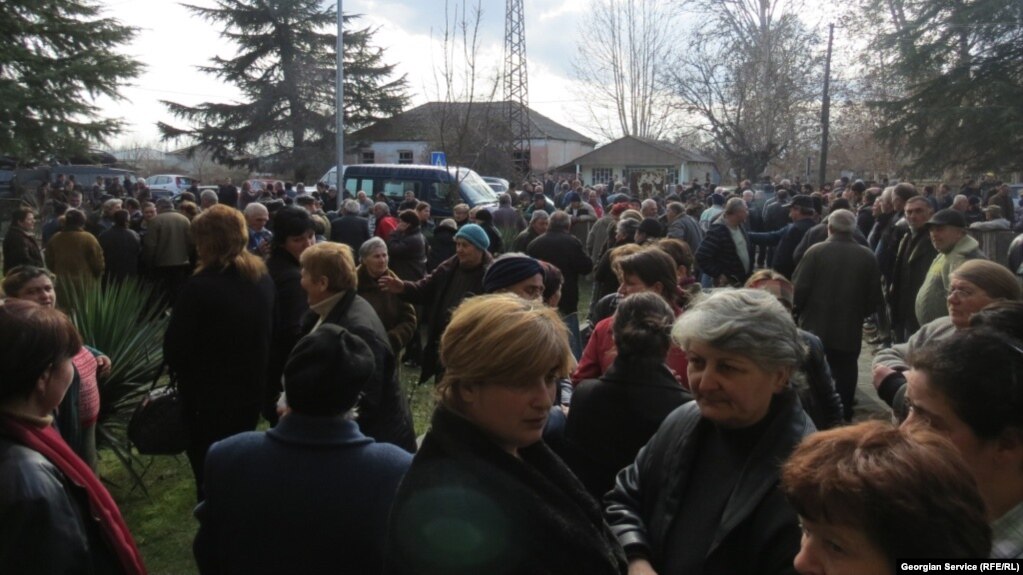
Demonstration of disaster victims in Kakheti

2013

This AI-generated translation may not be completely accurate.
Demonstration of disaster victims in Kakheti
On January 26, 2013, residents of Lagodekhi Municipality affected by a natural disaster blocked the Gurjaani–Lagodekhi highway in protest. They objected to the unequal distribution of compensation, claiming that the special commission responsible for assessing the damage had worked poorly and provided inaccurate information, resulting in unfairly low payments.
In the village of Apeni, part of the affected population held protests five times over the course of a week, blocking roads and gathering near the municipal and village administration buildings. Protesters demanded that the commission’s work be declared invalid and that a new one be formed.
Following the protests, the Ministry of Regional Development and Infrastructure decided to reassess the damage in Apeni and replace the commission members.
Similar demonstrations took place in Telavi and Kvareli. Some residents of the village of Chikaani believed that compensation was being distributed based on political affiliation. As a result, while some people protested, others accepted payments from the “Cartu Bank” branch in Telavi and expressed satisfaction.
At the time, the Georgian Dream coalition, which had come to power three months earlier after winning the October 1, 2012 elections, was responsible for the relief efforts. Compensation payments were financed by the Cartu Foundation, established by Prime Minister Bidzina Ivanishvili. The foundation planned to spend a total of 100 million GEL to compensate nearly 29,000 families affected by the July 19, 2012 disaster in Kakheti. The Ministry expected the compensation process to be completed by the end of February.