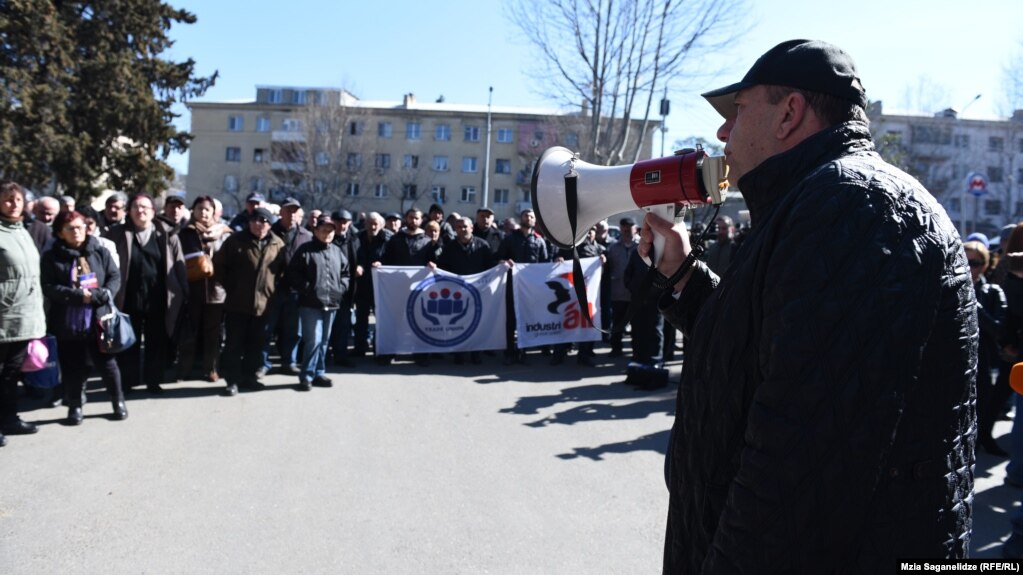
Protest of the locomotive factory workers

2019

This AI-generated translation may not be completely accurate.
Protest of the locomotive factory workers
In February 2019, workers at the locomotive-building factory began a collective labor dispute. Around 1,200 people were employed at the factory, most of whom were owed three to four months of unpaid wages, while some had not been paid for five to six months. The average salary at the plant was between 600 and 700 GEL. The factory administration cited low order volumes and debts owed by a foreign contractor as the reason for the wage arrears.
The Ministry of Internally Displaced Persons from the Occupied Territories, Labor, Health and Social Affairs appointed a mediator, but the mediation process ended without results. The employer refused to negotiate with the “New Railway Workers’ Union,” which represented the interests of the workers involved in the dispute, and instead requested the participation of another organization, the “Railway Workers’ Union.”
The parties failed to reach the negotiating table, leading to a protest on March 5. On that day, the trade union confederation, including the “New Railway Workers’ Union,” stood by the workers.
During the protest, the chairman of the trade union confederation, Irakli Petriashvili, read a letter from the factory’s foreign owner, “Logo Trans Company LTD,” stating that wage payments would begin within two weeks.
After this promise was not fulfilled, the workers resumed their protest on March 19 together with the trade unions and blocked the entrance to the factory, demanding that the administration honor its commitment and pay the six months of back wages.
On March 22, the “New Railway Workers’ Union” announced that the employer had started paying the wage arrears. After confirming the information, the protesters, who had been picketing the factory administration building since that morning, lifted the blockade to allow the accounting office to begin transferring payments to the workers’ individual accounts.