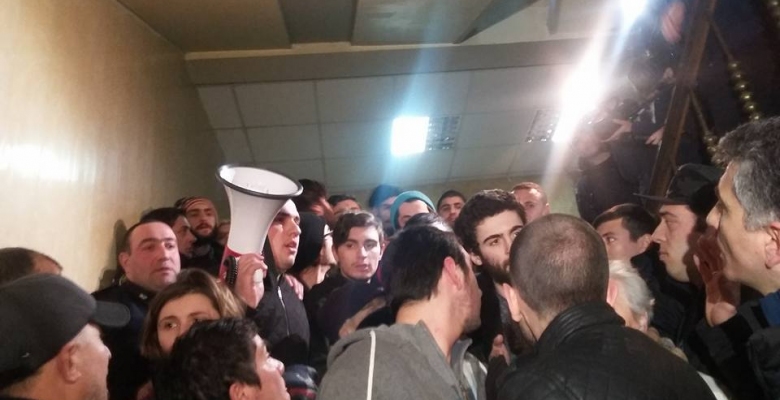
Demonstration of nitrogen plant workers

2017

This AI-generated translation may not be completely accurate.
Demonstration of nitrogen plant workers
On January 26, 2017, the administration of “Rustavi Azot” dismissed 350 workers. They began protest rallies and raised several demands:
The abolition of exploitative labor contracts. They said that they were forced to sign five-page contracts within one or two days, without the opportunity to study them with a lawyer.
Reinstatement of the dismissed employees in their previous positions.
Informing the Ministry of Economy that the enterprise was massively firing employees.
“Azot” was the only chemical plant in the South Caucasus producing mineral fertilizers. Its customers included companies from the South Caucasus, the Mediterranean, and the Black Sea countries. However, according to a statement released by the company, “Rustavi Azot” LLC began negotiations with creditors in August 2016 to achieve debt restructuring due to a difficult financial situation.
“From January 2017, ‘Rustavi Azot’ LLC could no longer ensure the operation of the plant, which led to the plant’s suspension. The new owner of the plant is currently taking certain measures to restore full operation. At the same time, the new owner has undertaken to pay the salaries of the majority of employees (approximately 90%), including for the period when the plant was stopped. Now, relevant labor contracts are being signed with these employees,” the company’s statement said.
On February 1, several organizations expressed solidarity with the plant’s employees, including “Auditoria 115,” “Free Zone,” and the “Rustavi Student Association.” The chairman of the Mining and Chemical Industry Trade Union, Tamaz Dolaberidze, told journalists that the plant’s management had promised to pay wages to the remaining workers and rehire those who had been dismissed; however, Dolaberidze said this was a lie.
On February 2, the plant’s employees entered the building and demanded a meeting with the acting director. The police removed them from the premises by force.
On February 7, dismissed employees of “Rustavi Azot” and other social groups, including the student organization “Auditoria 115,” organized a protest march in Tbilisi. The participants went to the “Bank of Georgia” headquarters and demanded a meeting with its management, but unsuccessfully. The protesters claimed that the real owner of the plant was, in fact, the “Bank of Georgia.” “Auditoria 115” published a document confirming this claim.
The demonstrators criticized the bank’s policies and pointed out that due to low salaries, most citizens were forced to take bank loans. During the march, there were clashes between protesters and law enforcement officers. The following days also saw protests held near the “Bank of Georgia” building.
Ultimately, 56 workers filed lawsuits in court. On March 28, 2018, the Rustavi City Court ruled in their favor and ordered the plant to reinstate the dismissed workers.