Pride Week – July 5, 2021 Demonstration

2021

This AI-generated translation may not be completely accurate.
Pride Week – July 5, 2021 Demonstration
In early June 2021, the organization working on queer rights, “Tbilisi Pride,” announced that “Pride Week” would take place in the capital from July 1 to 5. The week was to begin with a film screening, include a “Queer Festival,” and culminate on the fifth day with a “March for Dignity” (Pride) in Tbilisi.
President Salome Zurabishvili stated that Pride participants had the right to express themselves, while diplomatic missions called on the government to protect activists. Meanwhile, the Georgian Patriarchate released a statement urging foreign embassies accredited in Georgia to “refrain from supporting or encouraging Tbilisi Pride.”
The week opened with a private screening of the film “March for Dignity” at Club Khidi. Prior to this, the Ministry of Internal Affairs had issued a statement promising that the planned events would be held safely.
On July 2, just hours before the screening, homophobic groups, referred to by the media as hate groups, began gathering near the venue. They hurled insults, eggs, and stones at attendees and attempted physical assaults, but police detained 23 people.
Two days before the planned March for Dignity, the Patriarchate issued another statement inviting parishioners to gather on July 5 across from Parliament, near Kashueti Church, for a prayer service. Pro-Russian media outlet “Alt-Info” and its leaders also called on supporters to stage a counter-protest.
On the morning of July 5, hate groups began assembling in front of Parliament on Rustaveli Avenue. That same morning, during a government meeting, Prime Minister Irakli Garibashvili indirectly encouraged them, calling the March for Dignity “inappropriate” and claiming it was backed by the “radical opposition.”
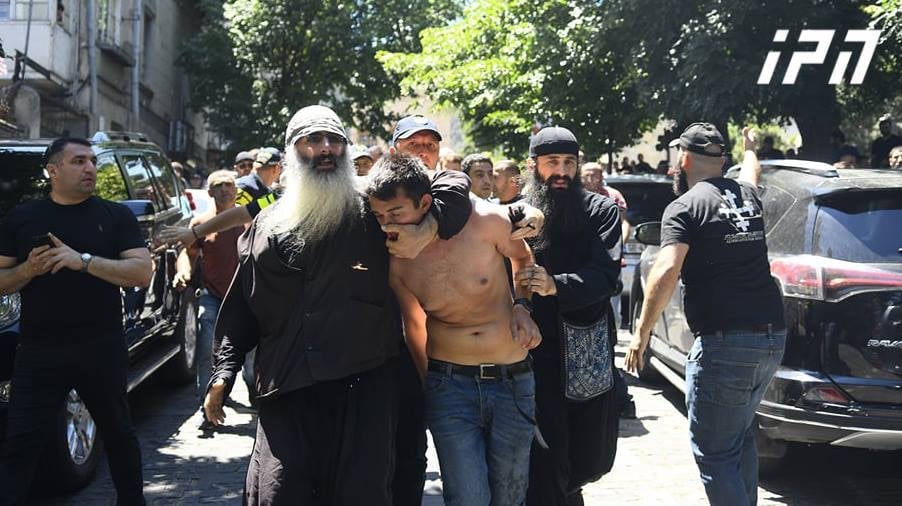
Throughout the day, television networks broadcast footage showing that opponents of the march were assaulting journalists and cameramen, verbally abusing them, and preventing them from filming.
Due to the escalating violence, “Tbilisi Pride” canceled the March for Dignity. However, hate groups did not disperse. That day, 55 people were injured — 53 of them journalists. The attackers vandalized various locations in the city, stormed the office of the NGO “Shame Movement,” and climbed onto the balcony of the “Tbilisi Pride” office, tearing down the LGBTQ flag and ransacking the premises.
Among those brutally beaten was TV Pirveli cameraman Lekso Lashkarava, who was later found dead at home by his mother on July 11. After the day of mass violence, hate groups returned to Rustaveli Avenue in front of Parliament and danced in celebration.
Although 32 people were arrested in connection with the July 5 violence, none of the organizers were among them.