“SOS: poisoned air”

2018

This AI-generated translation may not be completely accurate.
“SOS: poisoned air”
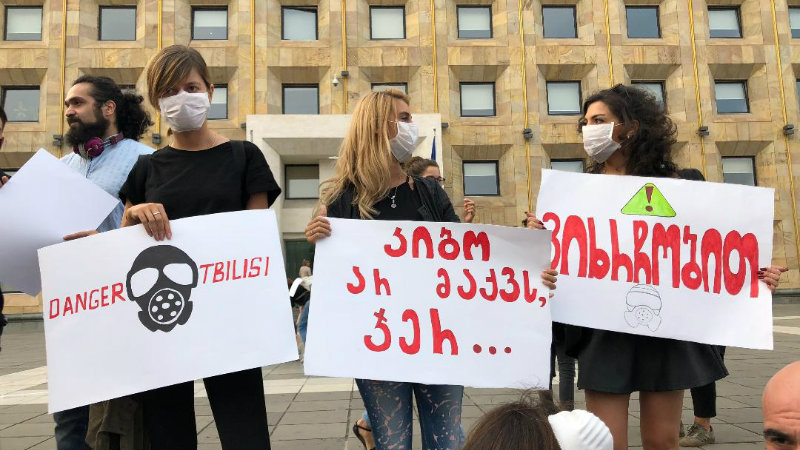
On September 22, 2018, a protest called “SoS: Poisoned Air” was held in front of the Government Administration building in Tbilisi. Participants, wearing masks and gas respirators, voiced concern over air pollution and presented specific demands to the government:
- Immediate enforcement of stricter vehicle inspection regulations;
- Modernization and replacement of the city’s public transport fleet;
- Testing and public disclosure of harmful substances in fuel, with immediate replacement of fuel exceeding allowed limits;
- Proper enclosure of construction sites according to established safety rules.
Protesters carried banners reading: “Children Can’t Breathe,” “Tbilisi’s Air Is Dangerous for Health,” “The Air Is Poisoned,” and “We Are Suffocating.”
On September 30, activists gathered again in Deda Ena Park under the slogan “Children Can’t Breathe,” reiterating the same demands. They also created a Facebook page titled “SoS: Poisoned Air,” where they shared information and encouraged citizens to report violations to the authorities.
Following public pressure, on October 3 the National Environmental Agency announced it would continue weekly monitoring of lead content in Tbilisi’s air until the end of 2018. Later, on October 18, the head of the Tbilisi Transport Department reported that around 200 yellow minibuses and 100 buses had been taken off the streets after failing technical inspections.
On October 23, activists protested unsealed construction sites outside Tbilisi City Hall.
On November 14, the European Parliament’s Association Agreement report urged the Georgian government to adopt a national strategy against air pollution.
On November 29, several monuments in Tbilisi were found covered with masks — a symbolic act of protest. Deputy Mayor Irakli Khmaladze called the gesture “an insult to respected figures.”
Starting January 14, 2019, new regulations took effect: vehicles without valid technical inspections would automatically be fined by “smart cameras.”
After this, the “SoS: Poisoned Air” campaign and its Facebook page became inactive, and no further protests were organized.