Student Hunger Strike to Defend National Treasure

1999

This AI-generated translation may not be completely accurate.
Student Hunger Strike to Defend National Treasure
On April 29, 1999, students began a hunger strike at the Mother Language Monument in Tbilisi, protesting the planned transfer of Georgian religious and spiritual art treasures abroad for exhibition. The government intended to send 130 artifacts to the United States, including 9th-century icons and manuscripts. According to the newspaper Kviris Palitra, the protesters feared that “Americans would seize the exhibition in exchange for the loans granted to Georgia.” They initially declared a three-day dry hunger strike, later continuing with strict fasting.
On May 11, State Minister Vazha Lortkipanidze met with the students. While acknowledging that the public should have access to ancient Georgian culture, they strongly opposed the removal of church treasures from the country. The government’s press service argued that such issues required “competent and coordinated decision-making, not protests and rallies.”
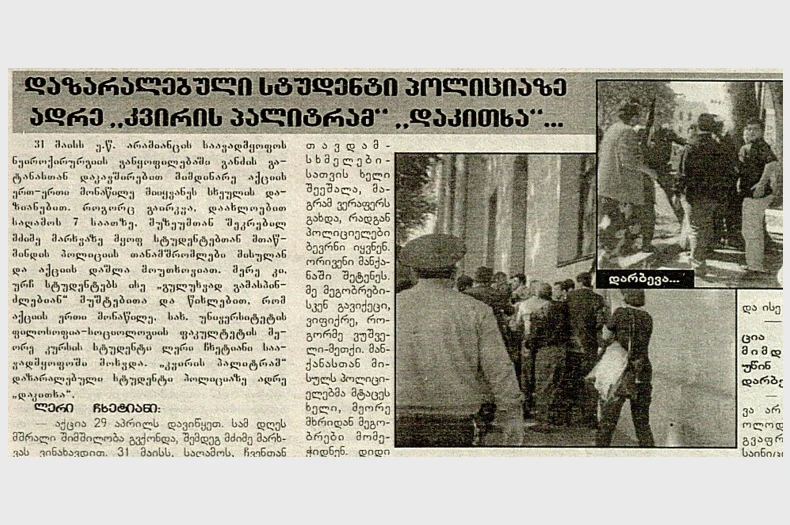
On May 31, students marched to the National Museum, but police dispersed them with force. One protester, Leri Chkhetiani, sustained a broken nose and a concussion. The others regrouped at the Mother Language Monument.
On June 6, students moved to Pushkin Square, where about 100 more people—supporters of Zviad Gamsakhurdia—joined, chanting anti-government slogans. This rally was also violently dispersed by the authorities.
In early July, the protests spread to Zugdidi. Local demonstrators claimed that among the artifacts to be exported was the ancient cross belonging to the Zugdidi Historical Museum. “Parliamentarian Tengiz Jughashvili spoke at the rally and blessed the students’ struggle,” reported Kviris Palitra.