Strike of Telas employees

2012

This AI-generated translation may not be completely accurate.
Strike of Telas employees
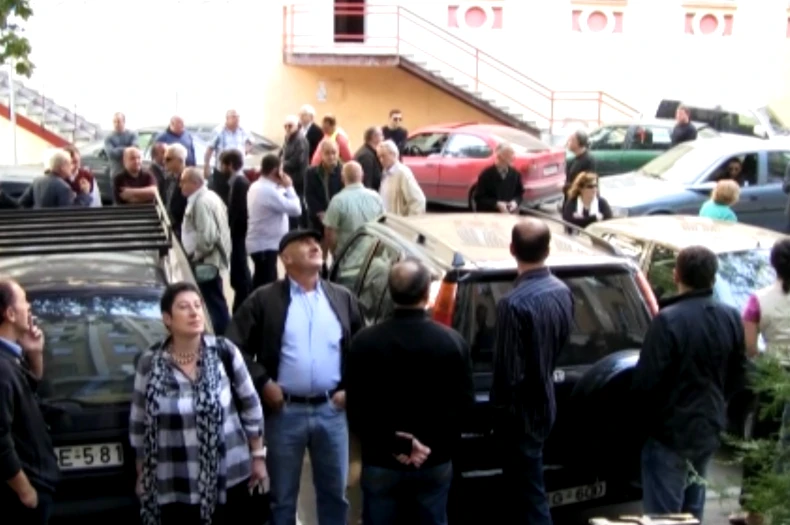
On October 19, 2012, part of the employees from the service centers of Tbilisi’s electricity distribution company “Telasi” held a protest in front of the company’s main office. They demanded the resignation of Zurab Arsošvili, the company’s commercial director.
The protesters told journalists that 15 Telasi branches had gone on strike. Employees demanded fair wages, protested what they called a “police-like” work environment, and claimed that controllers were being instructed to collect customers’ personal data.
The protest also included former employees who had been dismissed two months earlier. They alleged that Arsošvili had unlawfully and politically motivatedly fired around 150 workers and replaced them with activists of the ruling “United National Movement” and law enforcement officials. Before joining Telasi, Arsošvili had served as Deputy Minister of Energy and Natural Resources, a member of parliament, head of the National Guard Department, and governor of Shida Kartli. Journalistic investigations had previously accused him of various abuses of power.
Former employees sent a written appeal to Prime Minister-designate Bidzina Ivanishvili, asking for justice and reinstatement. Their first protest took place on October 17, focusing solely on reinstatement demands.
As a result of the protests, Telasi’s commercial director Zurab Arsošvili resigned. However, on November 8, employees went on strike again, claiming that Arsošvili’s team still controlled the company and continued to manage it unfairly and unlawfully. The strike was suspended after trade union representatives announced that an agreement had been reached with Telasi’s general director, Ashot Manukyan, to reinstate 125 dismissed employees and dismiss several high-ranking managers.
By November 20, the promise had still not been fulfilled, prompting Telasi workers to resume their strike, again demanding the reinstatement of their colleagues.