This Affects You – They’re Still Spying On Us!

2014

This AI-generated translation may not be completely accurate.
This Affects You – They’re Still Spying On Us!
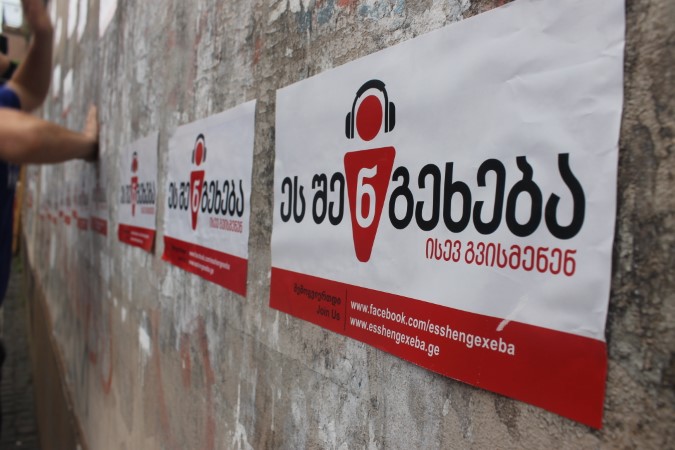
“This Affects You – They’re Still Listening” was a campaign by Georgian civil society organizations against illegal surveillance.
The original “This Affects You” campaign had taken place before the 2012 parliamentary elections, leading to legislative changes that introduced the must-carry and must-offer rules — measures designed to expand voters’ access to diverse media sources. In 2014, the campaign was revived, this time to draw public attention to the government’s continued practice of unlawful wiretapping and surveillance.
Launched on March 6, 2014, the new phase of the campaign urged Parliament to adopt long-delayed legislative amendments introduced a year earlier. These changes aimed to strengthen government oversight of surveillance conducted during investigations and to ensure that such monitoring occurred within clear legal boundaries.
“For years, investigative agencies have been listening to and spying on ordinary citizens, journalists, civil society representatives, political activists, lawyers, clergy, and others — without any control or authorization,” the campaign’s joint statement declared. This message was echoed in public demonstrations and video clips shared as part of the movement. Rallies were also organized in the regions.
Activists emphasized that while law enforcement should retain the ability to conduct surveillance in cases involving crime prevention, such actions must occur only in exceptional circumstances and under strict oversight — to prevent violations of the privacy of individuals unconnected to criminal investigations.
On August 1, 2014, the Georgian Parliament passed a bill regulating covert surveillance. Amendments to the Criminal Procedure Code allowed surveillance only when it was deemed necessary, proportionate, and appropriate to achieve legitimate objectives.
However, the law approved in August still granted the Ministry of Internal Affairs (MIA) direct access to telecommunications data through the so-called “key,” allowing the agency to intercept phone calls and monitor electronic communications without notifying service providers. Moreover, the new law failed to establish an independent monitoring mechanism.
Under additional amendments to the Law on Electronic Communications, Parliament was required to determine by November 1 who would hold the “key” granting access to surveillance systems. A special working group — composed of MPs, government officials, and NGO representatives — was formed to address this issue, but no agreement was reached. As a result, Parliament extended the MIA’s direct access to communications data until December 1.
Despite public opposition and a veto from President Giorgi Margvelashvili, the package of legislative changes on covert surveillance came into effect on December 1, 2014. Under the new rules — drafted by MPs Eka Beselia, Irakli Sesiashvili, and Gedevan Popkhadze — the MIA retained technical access to surveillance systems.
In response, the “This Affects You” campaign was reactivated. On December 19, activists organized a protest in Tbilisi, forming a human chain from Parliament to the Opera House and whistling to symbolize state eavesdropping. They argued that the new law continued to grant the MIA unchecked power to spy on citizens — the same abuses that had occurred in previous years — and announced plans to challenge the law in the Constitutional Court.
The case was indeed brought before the Constitutional Court, which on April 14, 2016, declared the existing surveillance framework unconstitutional. The court ruled that provisions allowing the State Security Service to maintain direct access to mobile operators’ servers violated citizens’ rights. Lawmakers were given until March 31, 2017, to establish new institutional and technical mechanisms to ensure lawful and independent oversight of covert surveillance.