Dispersal of the International Day Against Homophobia and Transphobia rally

2013

This AI-generated translation may not be completely accurate.
Dispersal of the International Day Against Homophobia and Transphobia rally
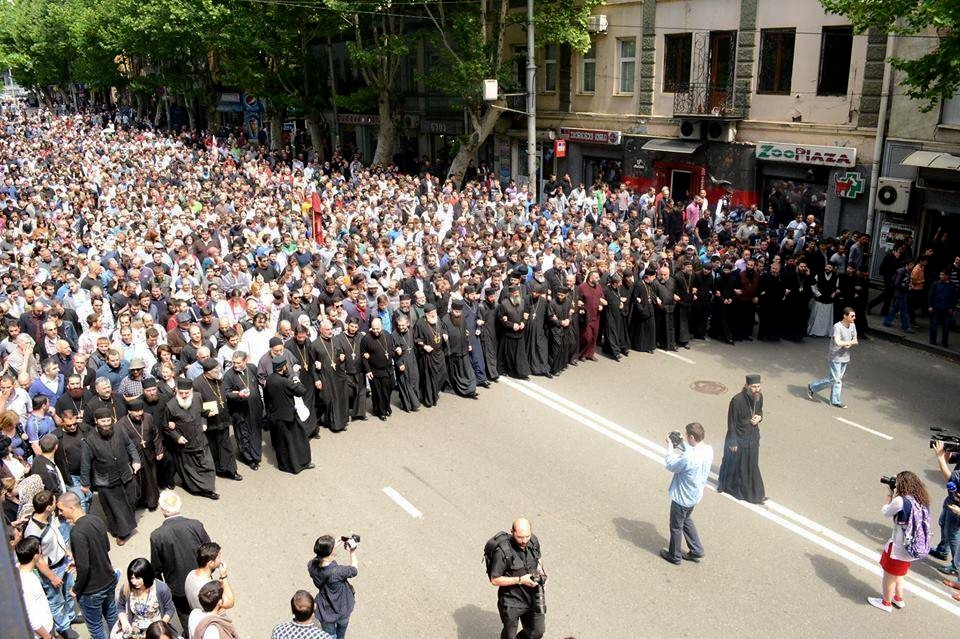
On May 17, 2013, the International Day Against Homophobia and Transphobia, the queer rights organization “Identoba” planned a rally in front of the Parliament building in Tbilisi during the first half of the day. However, earlier that morning, clergy and citizens, responding to calls from religious leaders, occupied the area around the Parliament and the entire Rustaveli Avenue. They carried crosses, icons, and nettles in their hands.
Because of this, members of the LGBT community, their human rights defenders, and journalists changed the gathering location and moved a few dozen meters away to Pushkin Square, where around 50 people assembled in total.
Police set up an iron barrier and formed a human cordon between the two groups. Queer activists believed the police would protect them from homophobic groups that day, especially after Prime Minister Bidzina Ivanishvili had publicly stated just days earlier, on May 14, “We will do everything to protect the rights of any minority, and this case will be no exception.”
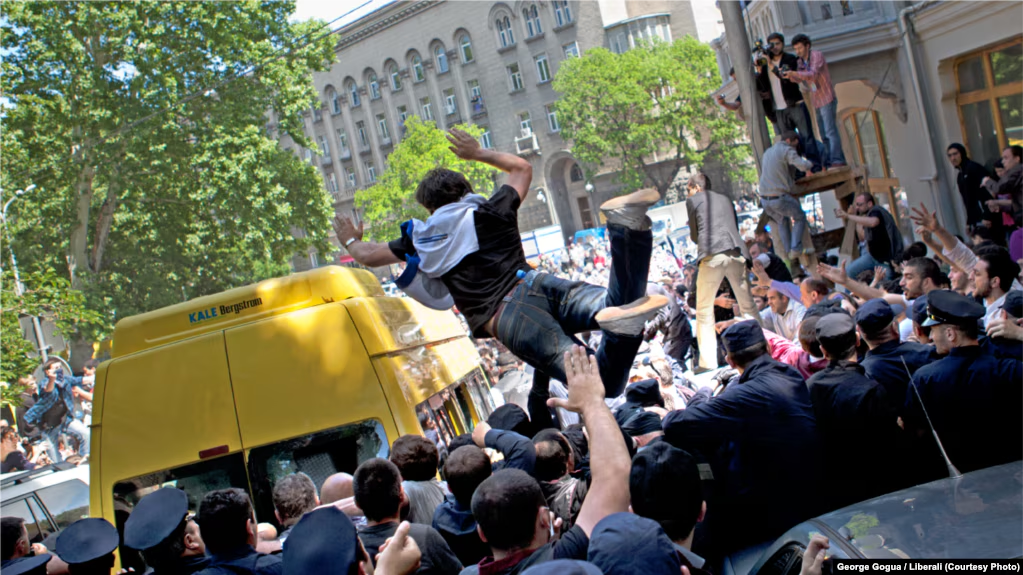
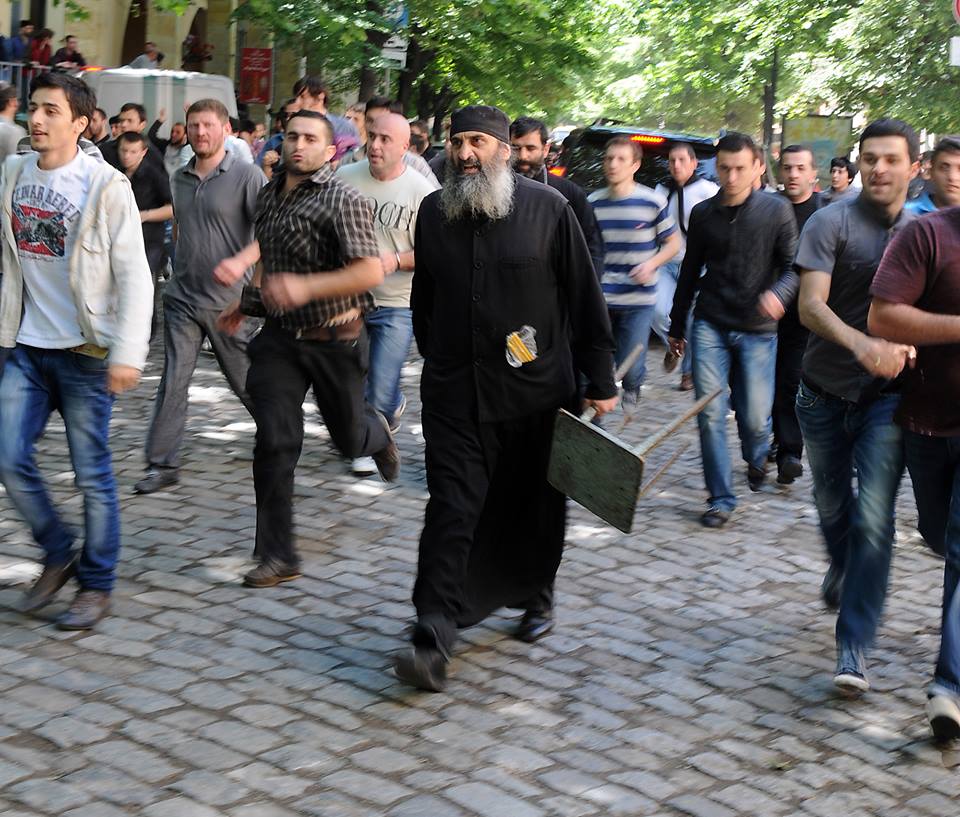
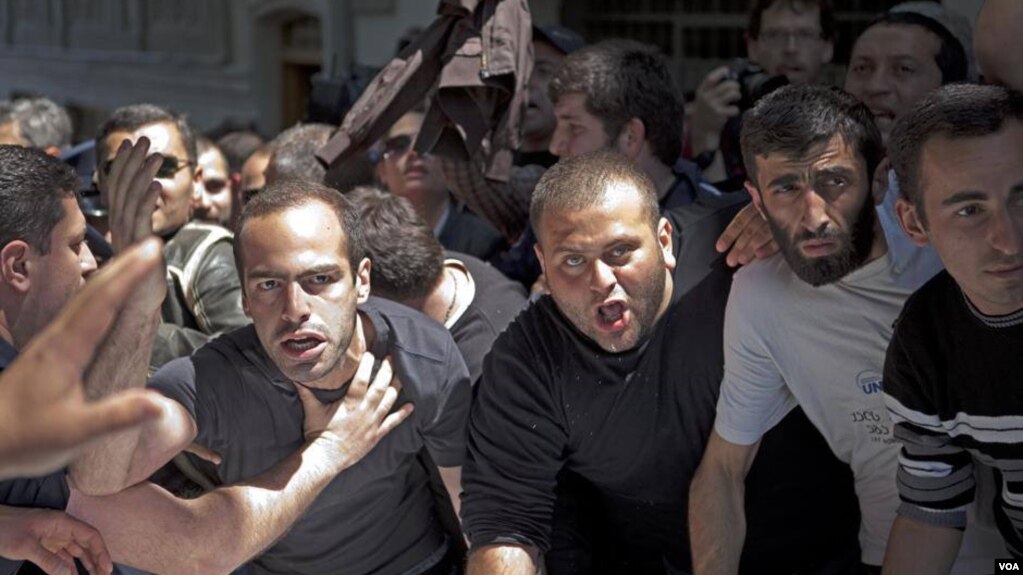
That expectation was not met. As the crowd on Rustaveli Avenue grew larger, hundreds of people, accompanied by clergy, began marching toward Pushkin Square. They broke through the police cordon and rushed toward the people gathered there. Shouting and swearing could be heard as they attempted to physically attack the queer activists, while police failed to respond adequately.
Suddenly, yellow buses appeared at Freedom Square. The police began placing everyone gathered in Pushkin Square — whether LGBT community members, rights defenders, or journalists covering the event — onto the buses to evacuate them from the city center.
As the buses began to move, members of the homophobic groups started hitting the vehicles and throwing stones at them, demanding that the drivers open the doors.
One minibus, carrying mainly queer activists, left the area through the narrow NATO Vachnadze Street. The attackers, aware of who was inside, threw stones at the vehicle, shattering its windows. The passengers cried and pleaded with the police for help. The driver managed to get the vehicle out of the area safely. At least 12 people were injured in total, including three police officers. “Those of us who were there still remember the stones flying toward us and the deep, unforgettable disappointment,” wrote Giorgi Kikonishvili years later in an article recalling the event. That disappointment, he explained, was directed toward the police and the state, which had failed to uphold its promise to protect the small group of protesters.
Despite the dispersal of the rally, violent groups continued to occupy Rustaveli Avenue until one of the clergymen called on them to go to the Holy Trinity Cathedral. The Patriarchate later distanced itself from the violence but stated that “propaganda of this kind cannot be allowed.”
The Public Defender of Georgia, Ucha Nanuashvili, criticized the authorities, saying they had failed to take the necessary measures to ensure the right to hold the rally.
That evening, Prime Minister Bidzina Ivanishvili condemned the violence and promised that all offenders would be “held accountable according to the law.” Several individuals, including two members of the clergy, were charged, and a few citizens were fined 100 lari each.
Following the events, the Catholicos-Patriarch of Georgia declared that from 2014 onward, May 17 would be celebrated as the “Day of Family Purity.”
On December 16, 2021, the European Court of Human Rights described the 2013 violence as “unprecedented” and ruled that the Georgian state, whose authorities had acted with “silent consent,” must pay 193,500 euros in damages.
“The authorities failed to take measures to protect the LGBT demonstrators from the mob, despite being aware of the risks associated with the event. Moreover, there is evidence, including independent journalists’ video footage, confirming the authorities’ tolerance of violent acts,” the court decision stated.