Street vendors protesting against tax changes

2010

This AI-generated translation may not be completely accurate.
Street vendors protesting against tax changes
On February 1, 2010, legislative amendments came into force imposing fines of up to 5,000 GEL on entrepreneurs who sold non-retail goods without proper invoices. However, traders feared that the new regulations would also affect retail sales.
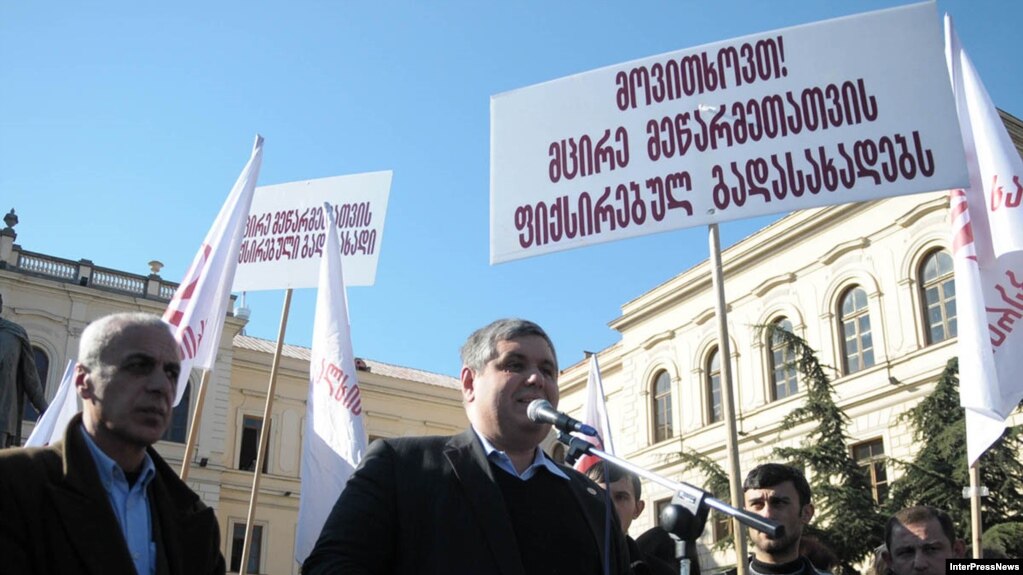
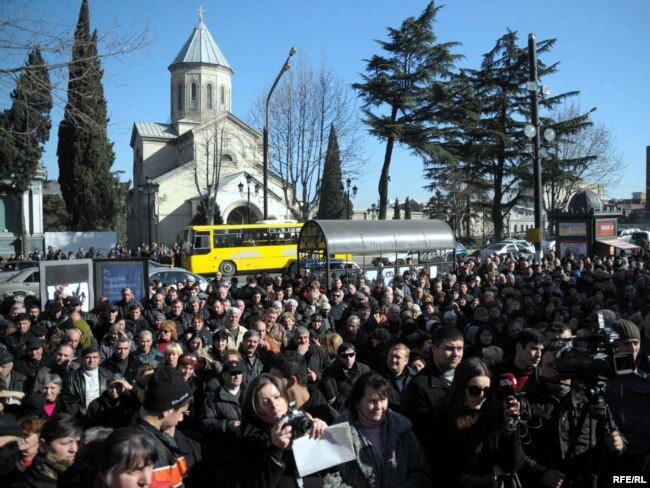
On the day the changes to the Tax Code took effect, vendors from several Tbilisi markets held a warning protest near the statue of Akaki Tsereteli — a site where street trading had taken place for the past 15 years. They also threatened to go on strike. The protest demands were voiced by Koba Davitashvili, leader of the People’s Party: “The decision must be suspended and canceled, and to prevent such incidents in the future, a fixed tax should be established.”
On February 2, the traders followed through on their threat and went on strike, gathering in front of Parliament. On the same day, vendors in Zugdidi also protested against the new regulations. Dozens of traders from markets and supermarkets went on strike in the morning and demonstrated outside the regional office of the Revenue Service.
Representatives of the Ministry of Finance expressed surprise at the protests, explaining that the invoice requirement had already existed in the Tax Code, and only the amount of the fines had been specified. They emphasized that the regulation did not apply to retail trade. Finance Minister Kakha Baindurashvili stated that the protest organizers were using the traders for political purposes: “It’s not true that the regulation applies to retail sales — that’s misinformation meant to mislead people.”
Baindurashvili’s attempt to resolve the issue through public statements proved ineffective. He visited the so-called Eliava Market and personally met with traders. His explanation — that the invoice requirement would not apply to retail sellers — did not satisfy the protest organizers. Koba Davitashvili demanded that the minister issue a written document clarifying this, so that traders could present it to tax inspectors if challenged: “When the tax inspector arrives, they can show the Finance Minister’s letter.”
Davitashvili formally submitted this request to the Ministry of Finance on February 3. The following day, Finance Minister Kakha Baindurashvili officially responded in writing. He read the ministry’s signed clarification letter aloud during a special press briefing broadcast on television.
Economics experts told Radio Free Europe/Radio Liberty that the need for the minister’s clarification arose from the ambiguous language of the Tax Code, which allowed for multiple interpretations by tax inspectors.