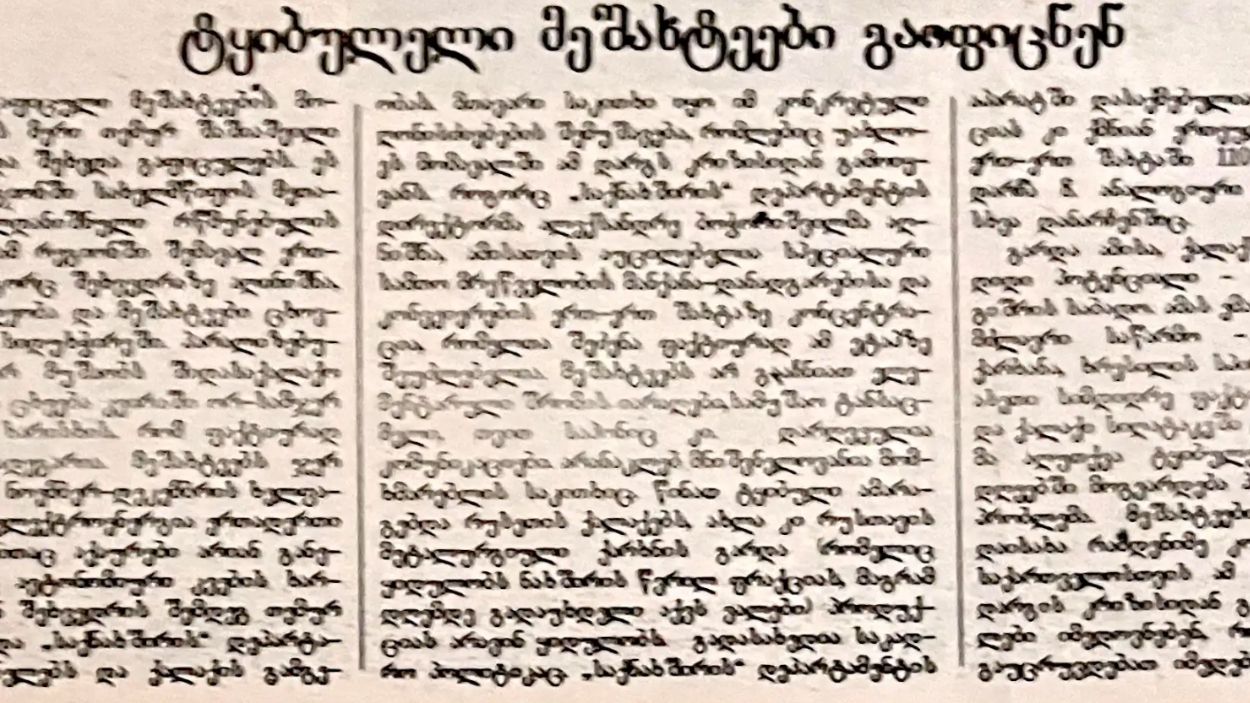
Miners’ Strike in Tkibuli

1995

This AI-generated translation may not be completely accurate.
Miners’ Strike in Tkibuli
On February 6, 1995, miners in Tkibuli went on strike, protesting dire social conditions. They had not yet received their salaries for November–December. Newly appointed mayor of Kutaisi, Temur Shashiashvili, met with the strikers. At the meeting, it was noted that Tkibuli residents and miners were living in extreme poverty: the railway was paralyzed, urban transport was not functioning, and bread was baked only two or three times a week—so poorly made that it was unfit for consumption. As the newspaper Resonance stated, “It seems electricity is the only luxury available to locals, and even that thanks to autonomous supply.”
Following the miners’ protest, Temur Shashiashvili also met with the leadership of the “Saknavtshiri” coal department and local officials to discuss ways out of the crisis. Representatives of Saknavtshiri stressed that new machinery and equipment were urgently needed, but impossible to purchase at that stage. “The miners lack even basic tools, work clothing, and even soap.” They also noted that while Tkibuli used to supply coal to Russian cities, now only the Rustavi metallurgical plant purchased the product, and it owed significant debts. Staffing was another problem—out of 3,200 people employed in the department, only a handful were actually producing output.
The region also had many unused resources, such as tea, granite, timber, an obsidian deposit, and a spirits factory in Khresele. Despite this, the city was sinking into poverty. Temur Shashiashvili promised Tkibuli residents to resolve the bread and transport shortages and ensure payment of overdue salaries.